
Everyday skin health · Officer · Berwick · Beaconsfield
Your Skin Doesn’t Need More Products. It Needs the Right Ones.
By Mel | Skin Atelier Australia
Viral skincare products, Korean skincare routines, luxury moisturisers and powerful exfoliating acids can make it feel as though healthy skin requires an overflowing bathroom shelf. It does not. Using too many skincare products can overwhelm your routine; a thoughtful approach uses the few products your skin actually needs while supporting comfort, consistency and a healthy skin barrier.
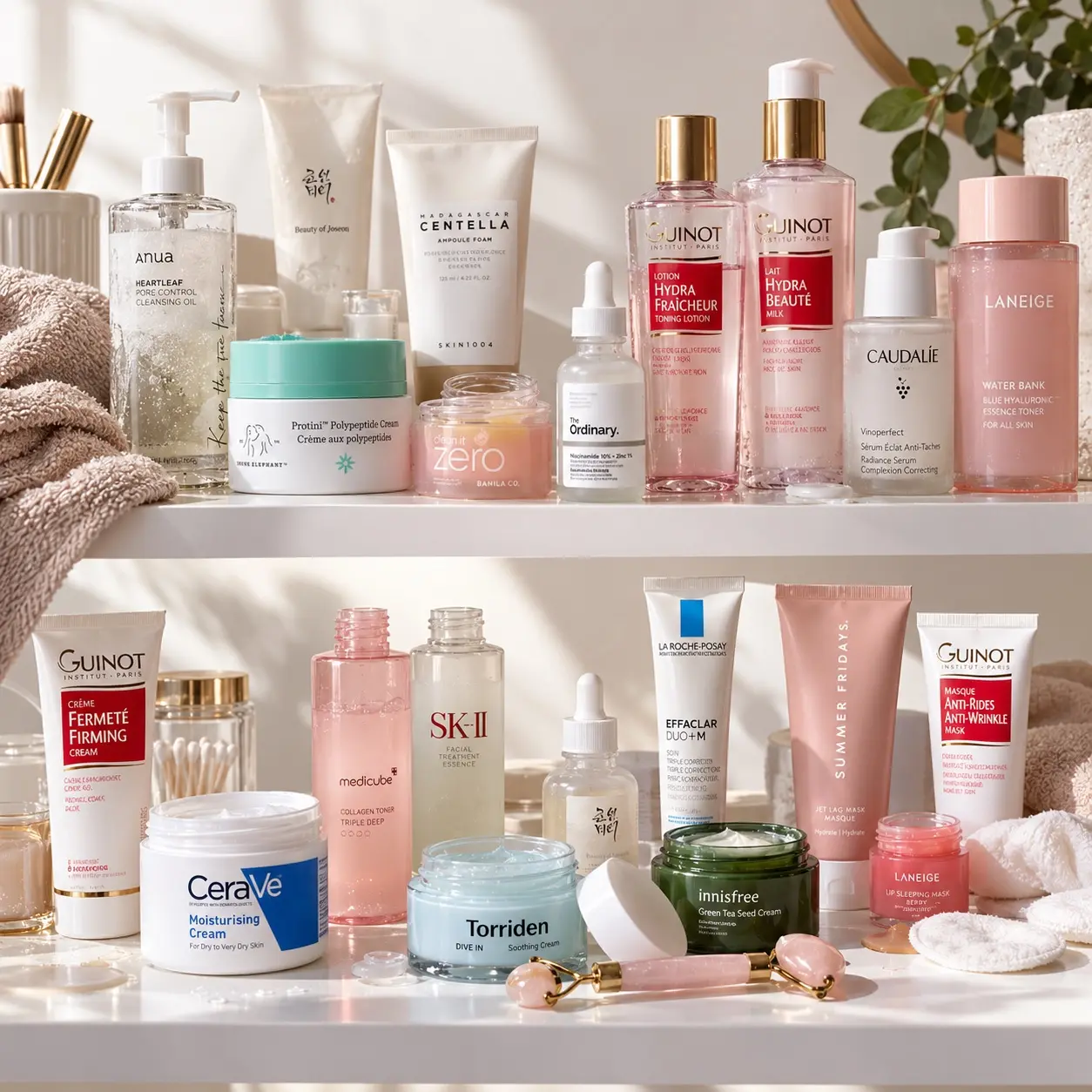
Viral skincare products are not a treatment plan
Social media is useful for discovering products, but popularity cannot tell you whether a formula suits your skin. Your friend’s favourite serum may be perfect for her and irritating for you. Skin type, current condition, sensitivity, pigmentation tendency, age, hormones, medications, climate and the products already in your routine all influence how your skin responds.
More steps do not automatically produce faster or better results. When several products contain exfoliating acids, retinoids or other strong active ingredients, their combined effect may be much greater than expected, contributing to over-exfoliation and signs of a damaged skin barrier. The answer is often to simplify, not to add another trending product.
Before buying more skincare products, understand your skin
Skin can be oily and dehydrated at the same time. Flaking does not always mean dead skin needs to be scrubbed away; it may reflect dryness or irritation. Breakouts do not always improve when every oil-reducing or exfoliating product is layered together.
Before buying something new, identify the purpose of each existing step. Ask what concern it addresses, which active ingredients it contains, how often it should be used and whether another product already performs the same job. Introduce one meaningful change at a time so you can see how your skin responds.
Damaged skin barrier: signs to watch for
The stratum corneum is the outermost part of the epidermis. It is often described as a brick-and-mortar structure: flattened skin cells form the bricks, while lipids—including ceramides, cholesterol and fatty acids—help form the surrounding matrix. Together they limit excessive water loss and help protect the skin from everyday irritants.
Harsh cleansing, frequent scrubbing and an unsuitable combination of active ingredients can disturb this protective system. Common signs associated with a damaged or irritated skin barrier include tightness, persistent dryness, flaking, redness, stinging, burning or suddenly finding that familiar products are difficult to tolerate. These symptoms can have several causes, so persistent or severe irritation should be assessed by an appropriate health professional.
Clean skin should not feel stripped
Healthy skin has a mildly acidic surface. Its exact pH varies between people and body sites, but research commonly places normal skin below neutral pH. Cleanser mildness depends on the whole formulation—not only the number printed on the bottle—yet repeated use of harsh alkaline soaps can raise surface pH and contribute to dryness or irritation.
Choose a cleanser that removes what needs to be removed without leaving your face squeaky, tight or uncomfortable. Very hot water and aggressive scrubbing are not required for an effective cleanse.
A simple skincare routine and layering order
A simple morning skincare routine follows this order: gentle cleanse or rinse, one well-chosen serum, moisturiser if your skin needs it, then broad-spectrum sunscreen. Toner can be included when it has a clear purpose, but it is optional—not a compulsory step.
At night, cleanse thoroughly and double cleanse only when needed to remove makeup or water-resistant sunscreen. Follow with your selected treatment and moisturiser. Good skincare layering should feel considered, not crowded.
Over-exfoliation: when more becomes too much
An exfoliant or mask may be used once or twice a week if it is suitable for your skin and compatible with the rest of your routine. That frequency is not a universal rule. Sensitive, inflamed or recently treated skin may need less frequent use—or none while it settles. Over-exfoliation can leave skin feeling tight, reactive or uncomfortable.
Avoid counting only products labelled “exfoliant.” Acids can also appear in cleansers, toners, serums, masks and spot treatments. Using several of these on the same day can unintentionally turn a simple routine into intensive exfoliation. Masks should also have a purpose, such as hydration or oil management, rather than being added because a long routine feels more complete.
Sweat, exercise and your routine
Sweating is a normal way for the body to regulate temperature. Sweat is not automatically harmful, but leaving sweat mixed with sunscreen, makeup and friction for a long period may feel uncomfortable and can contribute to irritation or breakouts in some people.
After exercise, gently rinse or cleanse when practical, especially if you are prone to congestion or sensitivity. There is no need to scrub. Reapply moisturiser and sunscreen as appropriate for the time of day.
When your skin barrier is asking for less
If your routine suddenly stings, your skin feels persistently tight or several new products have caused redness and flaking, pause the urge to cover the problem with more actives. A short, simple routine built around gentle cleansing, moisturising and daytime sun protection may give the skin a chance to settle.
The goal is not the longest routine or the most expensive shelf. It is a simple skincare routine you understand, can use consistently and can adjust when your skin changes. Clients from Officer, Berwick and Beaconsfield are welcome to explore Skin Atelier’s educational guides when they want clearer, calmer information—without pressure to follow every trend.
Research behind this guide
Selected references supporting this guide. Manufacturer information is identified separately from dermatology guidance and research. This article provides general education rather than medical diagnosis.